5 Family Philanthropy Lessons from Susan Schoenfeld
The hardest questions in family wealth aren’t financial — they’re human. How much do you tell your children about the family’s wealth, and when? How do you raise kids who are grounded rather than entitled? What does it mean to pass on values alongside assets?
These are the questions Susan Schoenfeld has spent her career addressing. As CEO and founder of Wealth Legacy Advisors LLC, she works with families of wealth and the advisors who serve them on what she calls the real issues of wealth — the ones that don’t show up on any balance sheet, but that quietly determine whether a family’s legacy holds together across generations.
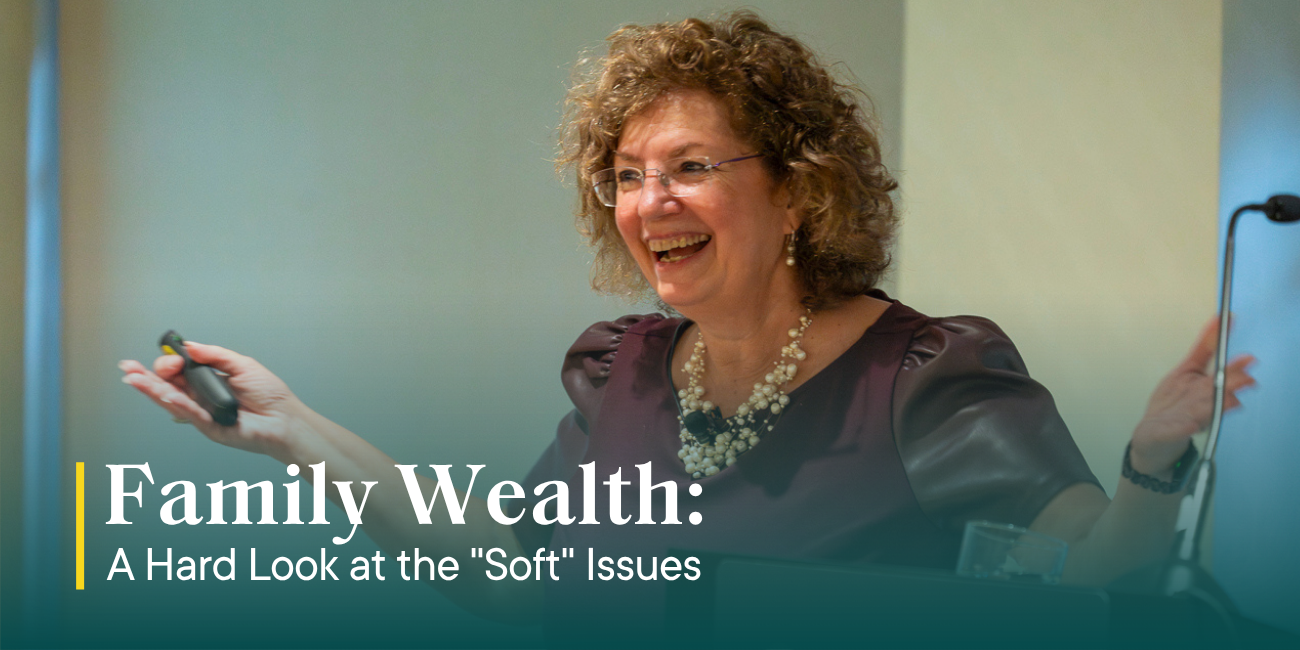
In June 2026, the Community Foundation for Southeast Michigan in partnership with Planned Giving Roundtable of Southeast Michigan brought Schoenfeld to Bloomfield Hills for “Family Wealth: A Hard Look at the “Soft” Issues” — a half-day conversation with donors, professional advisors, and nonprofit partners about the human side of wealth.
What follows are five of the most resonant lessons from that morning.
Lesson 1: The hardest questions in family wealth aren’t financial — they’re human.
Most advisors lead with investment performance, tax strategies, and legal structures. Those things matter. But they aren’t what keeps families of wealth up at night. What actually keeps families up at night is the human side: how much to tell the kids, how to raise children who are grounded rather than entitled, and how to make sure wealth becomes a source of purpose rather than division.
Susan Schoenfeld has spent her career arguing that these so-called “soft issues” are, in fact, the hardest ones families face — and the ones most likely to determine whether a family’s legacy holds together across generations.
Lesson 2: Wealth is Already the Elephant in the Room
Children see how you live. They Google you, they Zillow your house, and if you have a private foundation, they can find your giving history on GuideStar. Pretending the wealth doesn’t exist isn’t protecting them — it’s leaving them unequipped for conversations that are coming regardless.
Schoenfeld’s advice: don’t fudge. It’s okay to tell a child that something is private rather than secret, and that you’ll talk about it at home — as long as you actually do. The money talk may be uncomfortable, but the cost of never having it is far greater.
Lesson 3: The single best thing you can do for your children is make them work.
Across hundreds of families, the most consistent answer to “how did you raise non-entitled kids?” was this: require after-school jobs and summer jobs, in companies outside the family business. Earning your own paycheck — and watching withholding taxes take a piece of it — creates a relationship to money that simply can’t be replicated by being handed funds.
It builds financial literacy, teaches the difference between wants and needs, and perhaps most importantly, builds empathy for the people who will one day work alongside or for your children. For younger children, the three-jar allowance system (spend, save, give) and matching contributions to the give jar offer an early, tangible introduction to the same principles.
Lesson 4: Family governance isn’t about documents — it’s about stories.
The will, the trust, the foundation documents — those are the scaffolding. The real work of family governance is answering a more fundamental question: who are we, and what do we want to pass on? Schoenfeld walked through the who, what, when, where, and how of family meetings, with one clear throughline: the families that navigate wealth well are the ones who have articulated their values before the disagreements arise, not after.
That might mean a formal family constitution, a shared mission statement, or simply a set of stories told and retold across generations. It also means being thoughtful about who is in the room — including spouses, who are the parents of your grandchildren, and whose buy-in to your family’s values matters more than most people realize.
Lesson 5: Silence is the most expensive estate planning mistake you can make.
Schoenfeld shared a story from her own family: her grandmother left everything to one daughter and nothing to the other — for entirely understandable reasons that were never communicated. The daughter who received nothing experienced it as proof she wasn’t loved. The sisters estranged. The assets eventually passed to a distant cousin, and the rift was never repaired. The lesson isn’t that parents can’t make different choices for different children. It’s that the silence around those choices does damage the explanation would have prevented.
Whether the conversation is about an unequal inheritance, a prenuptial agreement, or a philanthropy decision, the families that fare best are the ones who have it early, honestly, and in their own words — because bequests are a message from those who are no longer here. Make sure you leave the message you intend to.
Questions about family philanthropy? Connect with our Donor Services team at [email protected].