NEWS & PRESS


Reflections from our 2026 Annual Meeting
In General

On June 24, we hosted our 2026 Annual Meeting at Lawrence Technological University. This meeting is our opportunity to connect with grantees, donors, community partners, supporting organizations, and affiliates across our seven-county footprint — and to deliver the State of the Community Foundation Address. This year, we came prepared not only with an update on our progress, but with data and an invitation to a larger conversation.

Here are five key updates from the 2026 Annual Meeting:

  • The Numbers: Our 2025 year-end financials, grantmaking totals, and meaningful progress on operational efficiency
  • Initiative Updates: Transitions, spinoffs, and continuing work across our portfolio of initiatives
  • Michigan’s Challenges: An honest look at the data — and why it matters for our partners
  • Nonprofit Sector Research: First-ever Community Foundation-commissioned oversampling of data for nonprofits in our seven-county region
  • A Call to Act Together: How we’re responding — and how you can be part of it
Progress and a Platform for More

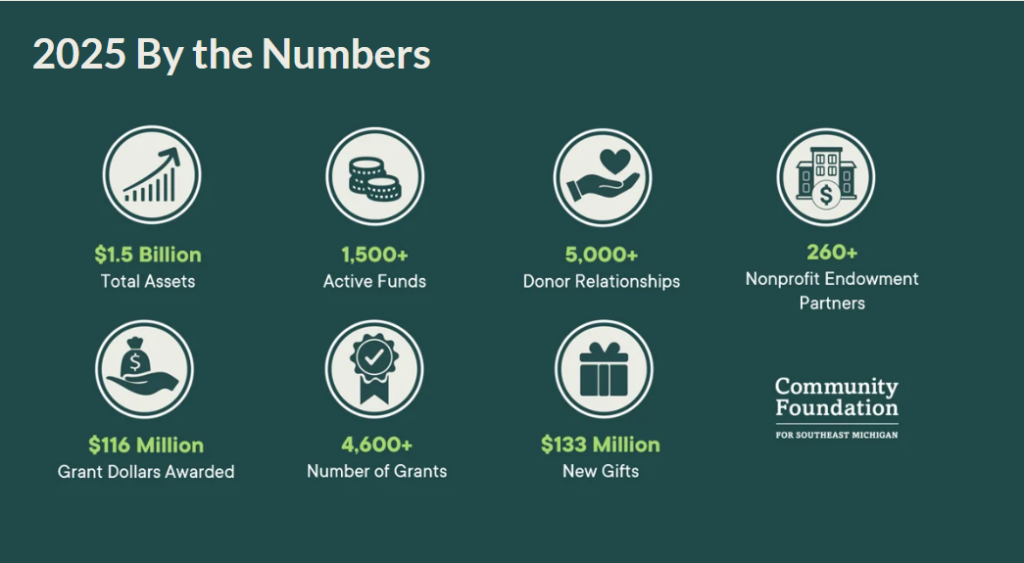
In 2025, we awarded more than 4,600 grants totaling $116 million, and we closed the year with $1.5 billion in assets. More than 5,000 donors entrust us to put their generosity to work where it matters most.

We processed just over 4,000 Donor Advised Fund grants totaling more than $75 million — and reduced our processing time by two days over the prior year. More significantly, we simplified our grantmaking process, cutting the time it takes for an applicant to know whether their application is competitive from five months down to four weeks. We have miles and miles to go, but these are steps in the right direction.


Transitions, Spinoffs, and Continuing Work

As one of very few community foundations in the nation that directly staffs and leads initiatives, the privilege of not just stewarding charitable resources, but also the privilege and responsibility of working in community as leaders and doers. We updated attendees on six of our key initiatives:

The Pontiac Funders Collaborative will transition into the City of Pontiac’s mayor’s office, in partnership with Oakland County by the end of 2026. This is exactly how we want initiatives to evolve: work we began at the Community Foundation for Southeast Michigan is now moving into the hands of the community it was created to serve.

The Michigan Justice Fund will soon publicly announce its spinoff from the Community Foundation for Southeast Michigan. This move will enable MJF to take its work from a statewide model to a national platform.

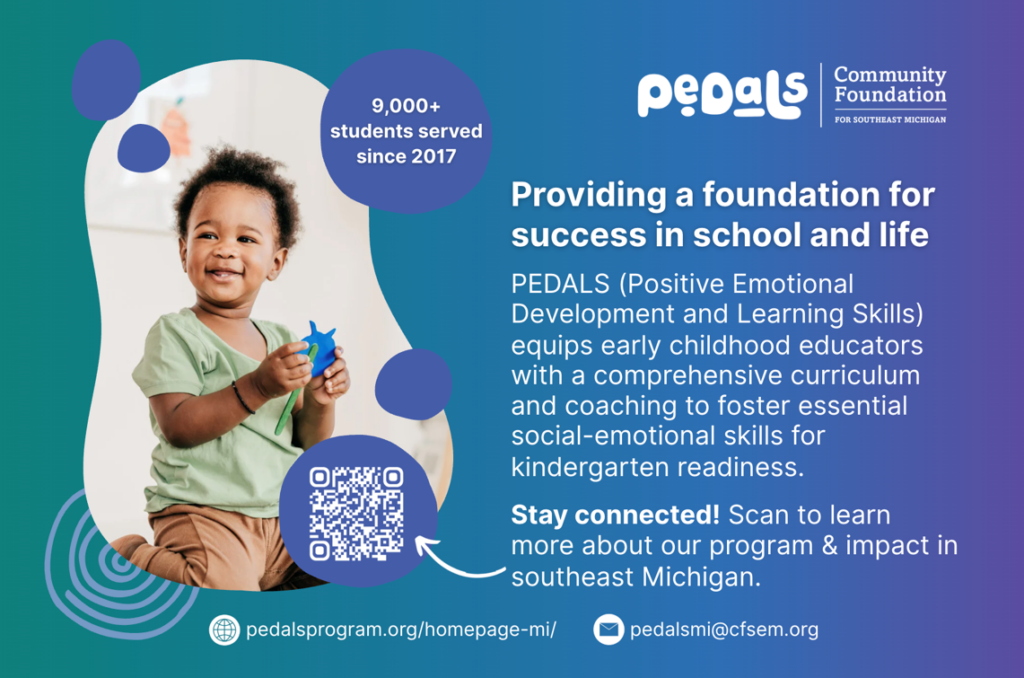
PEDALS,Positive Emotional Development and Learning Support, is actively exploring new partnerships. We encourage partners who are interested in early childhood development to connect with us.
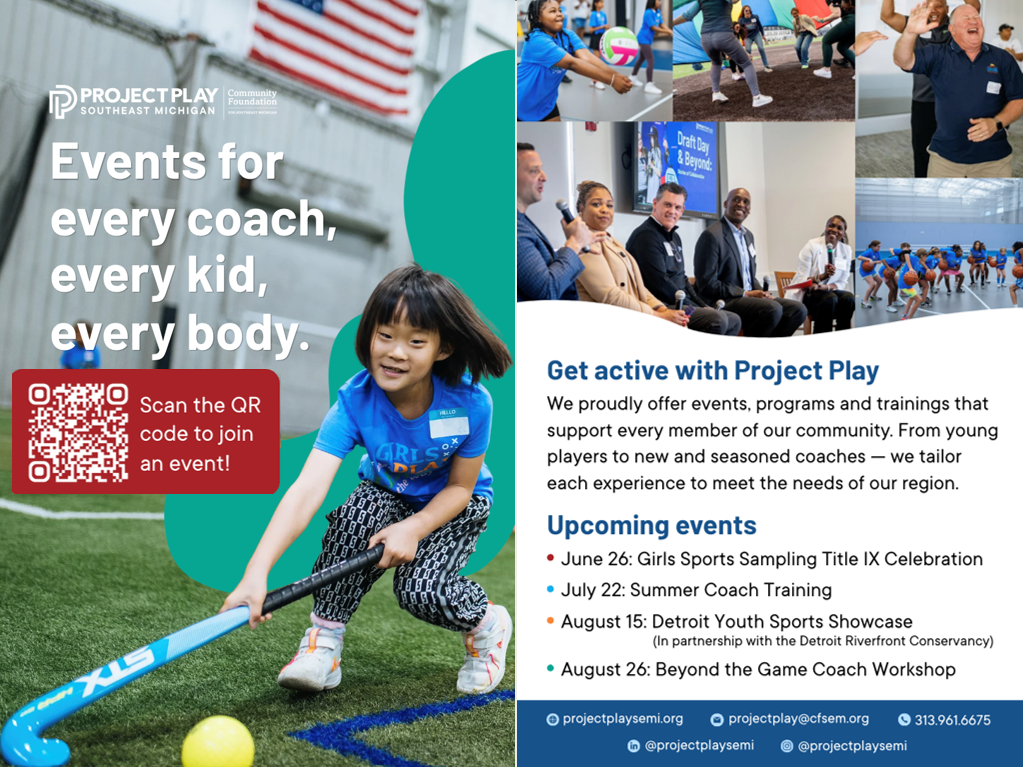
Project Play has built the only table in southeast Michigan that brings together youth sports organizations and the four major professional sports teams. We expect them to play a role with the NCAA Final Four in 2027.
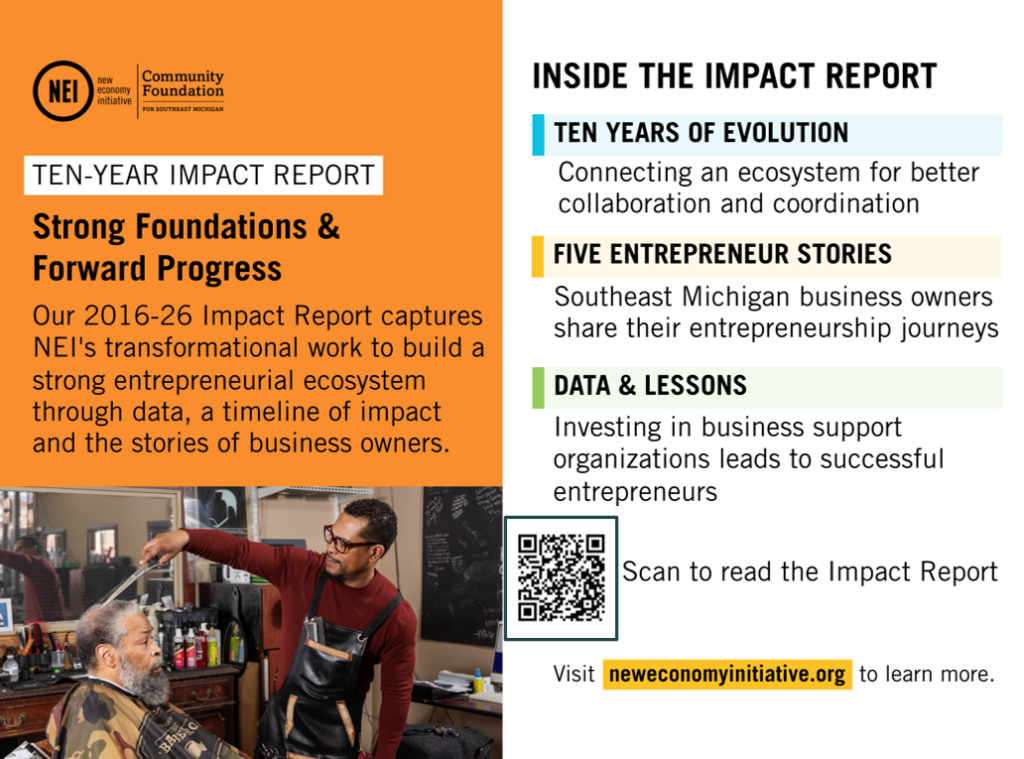
The New Economy Initiative recently released a 10-year retrospective on its investment in the region’s entrepreneurial ecosystem. Download the report to learn more.

The new Rural Leadership Initiative, funded by the Ralph C. Wilson, Jr. Foundation, will provide more than $5 million in direct resources to the rural corridors of northern Macomb, northern Oakland, and Livingston counties.


Compounding Crisis

There is a throughline between our initiatives and the partners who joined us in the room for our Annual Meeting. We all want southeast Michigan to be a place where everyone thrives. Yet, for the past 20 years, data suggests we are getting further away from that vision.

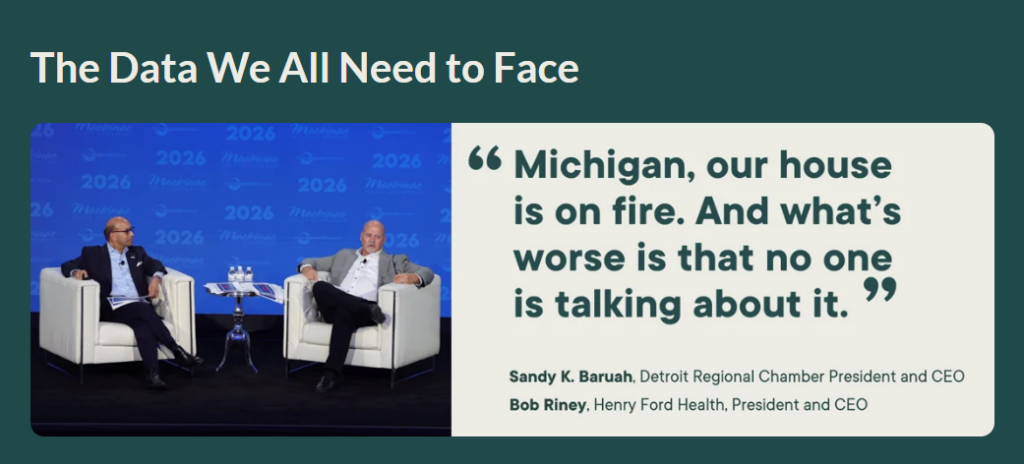
At this year’s Mackinac Policy Conference, Detroit Regional Chamber President Sandy Baruah and Conference Chair Bob Riney said plainly: “Michigan, our house is on fire. And what’s worse is that no one is talking about it.”

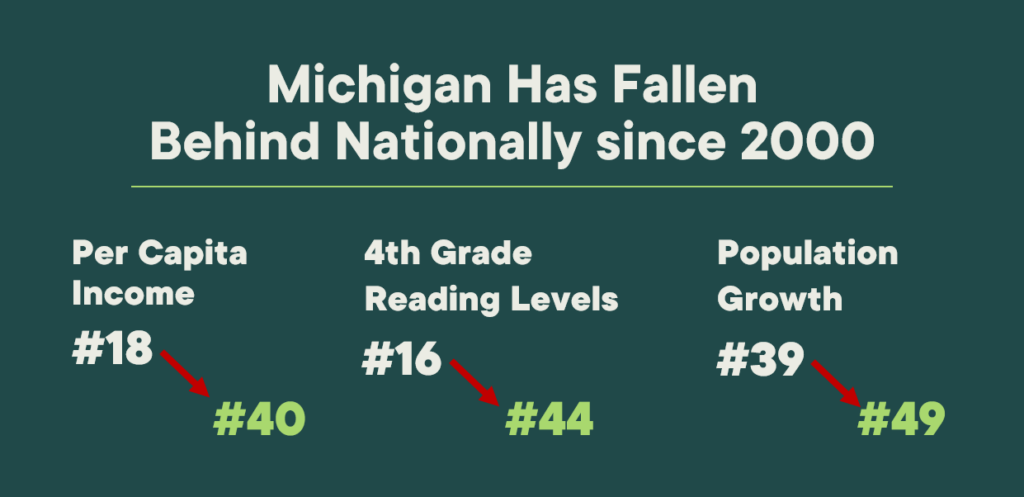
They were careful to say this is not a partisan issue, and they believe Michigan’s challenges are serious — but not irreversible. The data below, drawn from the Detroit Regional Chamber’s 2026 State of the Region, tells a sobering story.

What makes this especially striking is the perception gap. Michigan voters believe the state is performing around the middle of the pack. The reality is we’re performing near the bottom. On attracting high-tech jobs, voters guessed 28th — we are actually 45th. On 4th-grade reading, voters guessed 27th — we are 44th.

“In just one generation, Michigan has fallen from a top 10 or 20 state to a bottom 10 state in per capita income and educational achievement… It is hard to solve a problem if we don’t think we have one.”
~ Sandy Baruah

We raise these findings not to alarm – though they are certainly alarming – but because they are the context in which every organization is operating.

A Call to Act Together

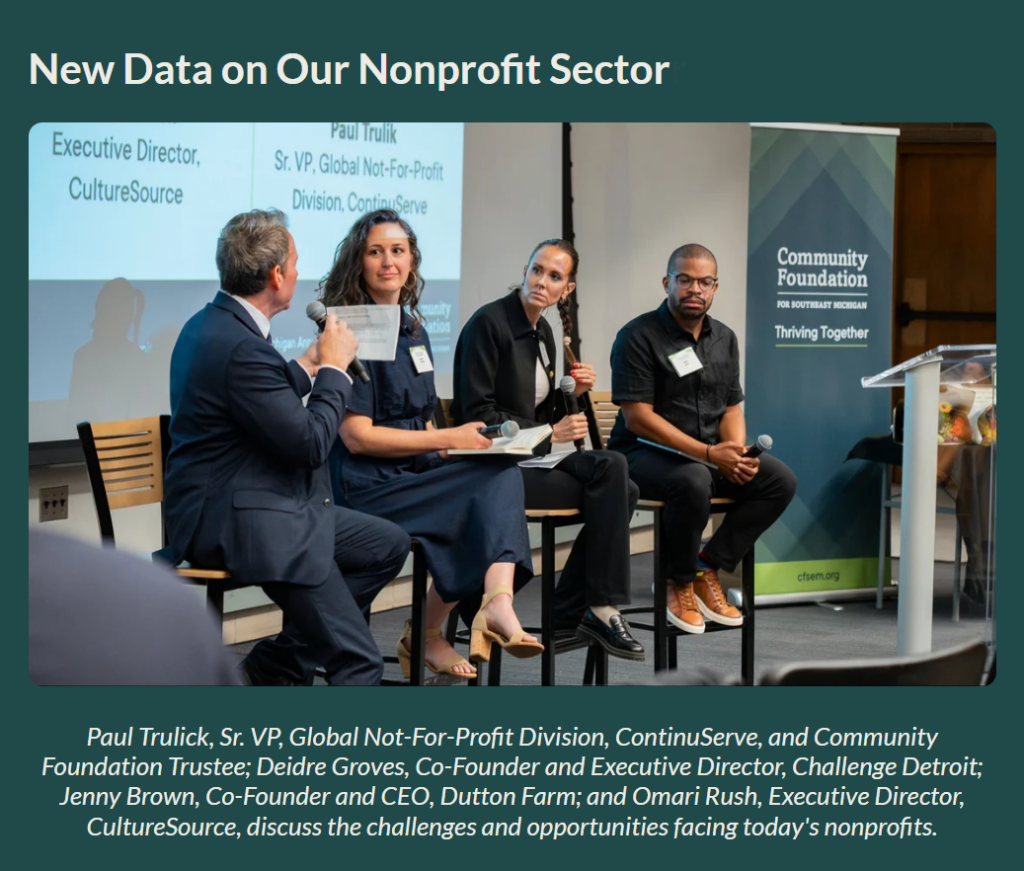
In times of uncertainty, two of the most important things we can do are (1) listen directly to those who are doing the work and (2) replace assumptions with data. So that’s where we started. We brought together several nonprofit leaders for a robust panel discussion, and together, discussed the data that is driving their decision making.

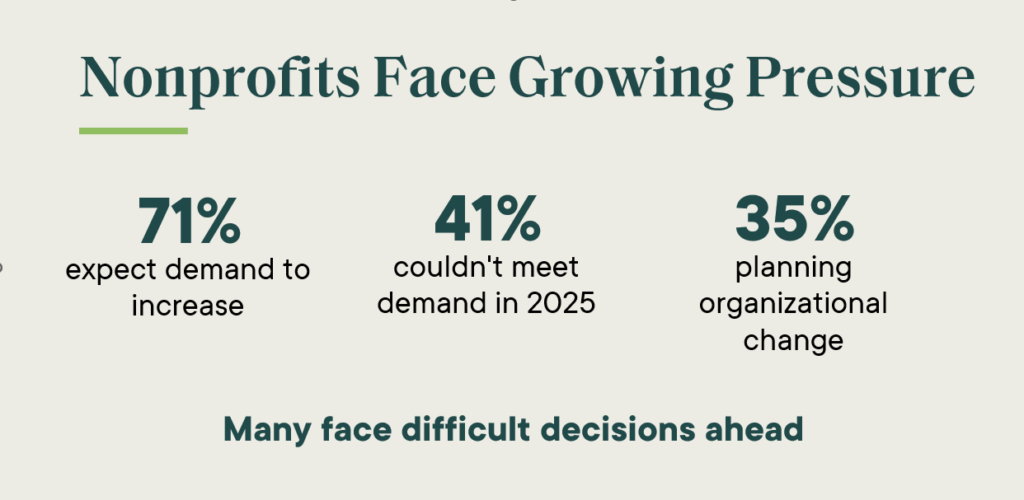
Every year, Urban Institute conducts one of the most rigorous surveys of nonprofit trends in the nation. This year, the Community Foundation commissioned and funded a first-ever oversampling of nonprofits in our seven-county footprint — giving us, for the first time, a statistically significant picture of our region’s nonprofit sector.

Three numbers from that data stood out:

Several partners in the philanthropic community — along with our board and leaders across the sector — agree we have a role to play that goes beyond grantmaking. We are partnering with Monitor Institute by Deloitte, an organization that is already doing nationally what we hope to build here in southeast Michigan. We are building on the good work already underway through The Transforming Solidarity Collective, the Michigan Nonprofit AssociationCo.Act, and Advancing Macomb, among others.

If your organization is thinking through questions about its future — its business model, its programs, its partnerships — we want to hear from you. Email [email protected]


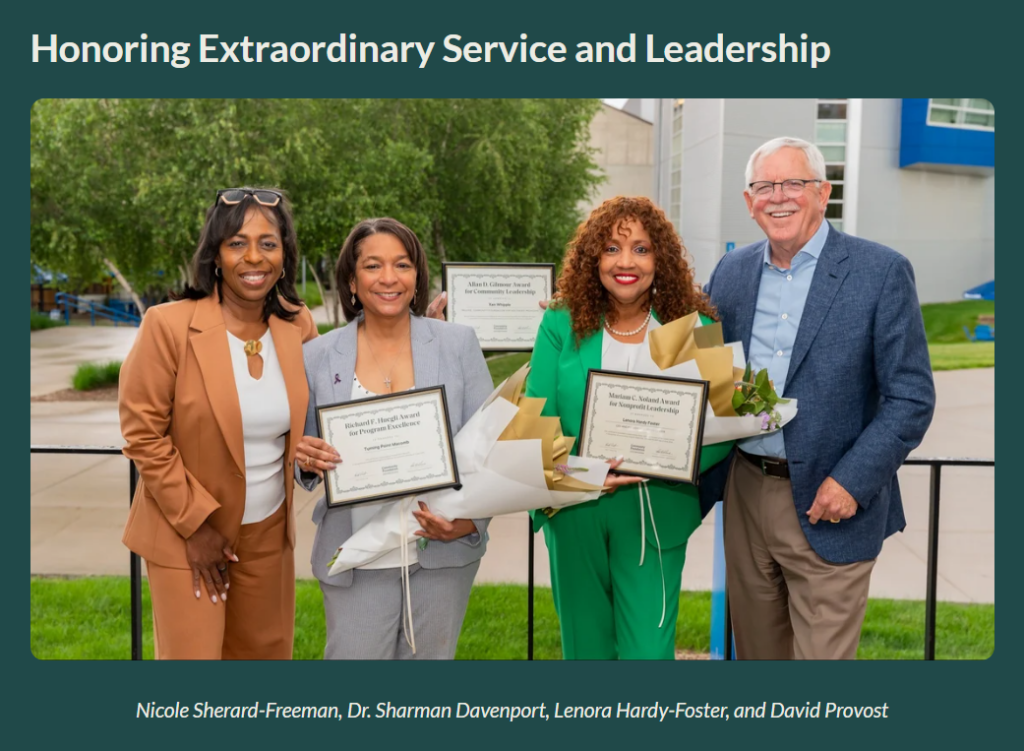
The Community Foundation for Southeast Michigan Board of Trustees presented three leadership awards during the 2026 Annual Meeting.

Richard F. Huegli Award for Program Excellence presented to Turning Point Macomb, accepted by President and CEO Dr. Sharman Davenport. The Richard F. Huegli Award honors a nonprofit that demonstrates high standards in human services programming and belief in human potential. Turning Point Macomb serves more than 27,000 survivors each year of domestic violence, sexual violence, and human trafficking. The organization offers a 24-hour crisis hotline, emergency shelter, transitional and permanent housing, legal advocacy and more.

Mariam C. Noland Award presented to Lenora Hardy-Foster, CEO and president of the Judson Center. This award recognizes a nonprofit executive in southeast Michigan whose service exemplifies the importance of leadership. The Judson Center is a Farmington Hills-based organization that serves more than 13,000 children, adults and families each year across five counties. The Community Foundation has supported the Judson Center’s work across multiple programs since 2020, awarding six grants totaling more than $116,000.

Allan D. Gilmour Award for Community Leadership presented to Ken Whipple, who was unable to attend the awards ceremony. Named for the chairman emeritus, this award recognizes a member of the Board of Trustees for their exemplary volunteerism and philanthropy, both to the Community Foundation and the broader community. As part of this distinction, Whipple has the privilege of recommending a $5,000 grant to a nonprofit of his choosing.


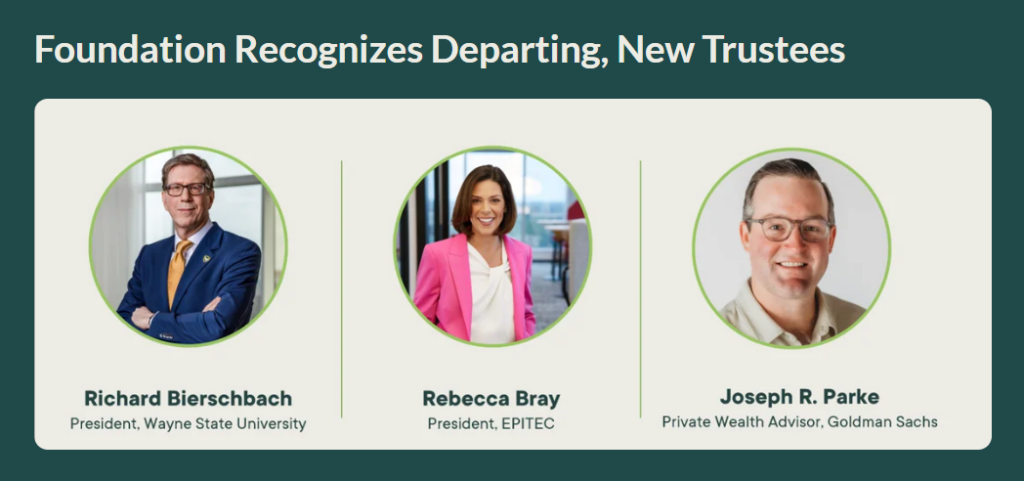
The Community Foundation’s Governance Committee recognized several changes to the Board of Trustees. Three departing trustees were thanked for their service: Wendy Batiste-Johnson, Bonnie Larson and Sean K. Werdlow. The election of three new trustees was approved for a term of July 1, 2026, through June 30, 2029. They are Rebecca Bray, Richard Bierschbach and Joseph R. Parke.

Early, informal feedback on this year’s Annual Meeting is already coming in. So far, attendees agree: At the intersection of Michigan’s rankings, SE Michigan’s economic landscape, and our non-profit sector’s realities is an opportunity for an honest, thoughtful plan about the way forward.

If you’d like to join us for a deeper review of the data, a conversation about the realities and work ahead, or if you have ideas and interest in supporting the work – please reach out to me directly or email us at [email protected].

Yours for the region,

Nicole