Community Foundation for Southeast Michigan Hosts Candid Conversation About Nonprofit Pressures
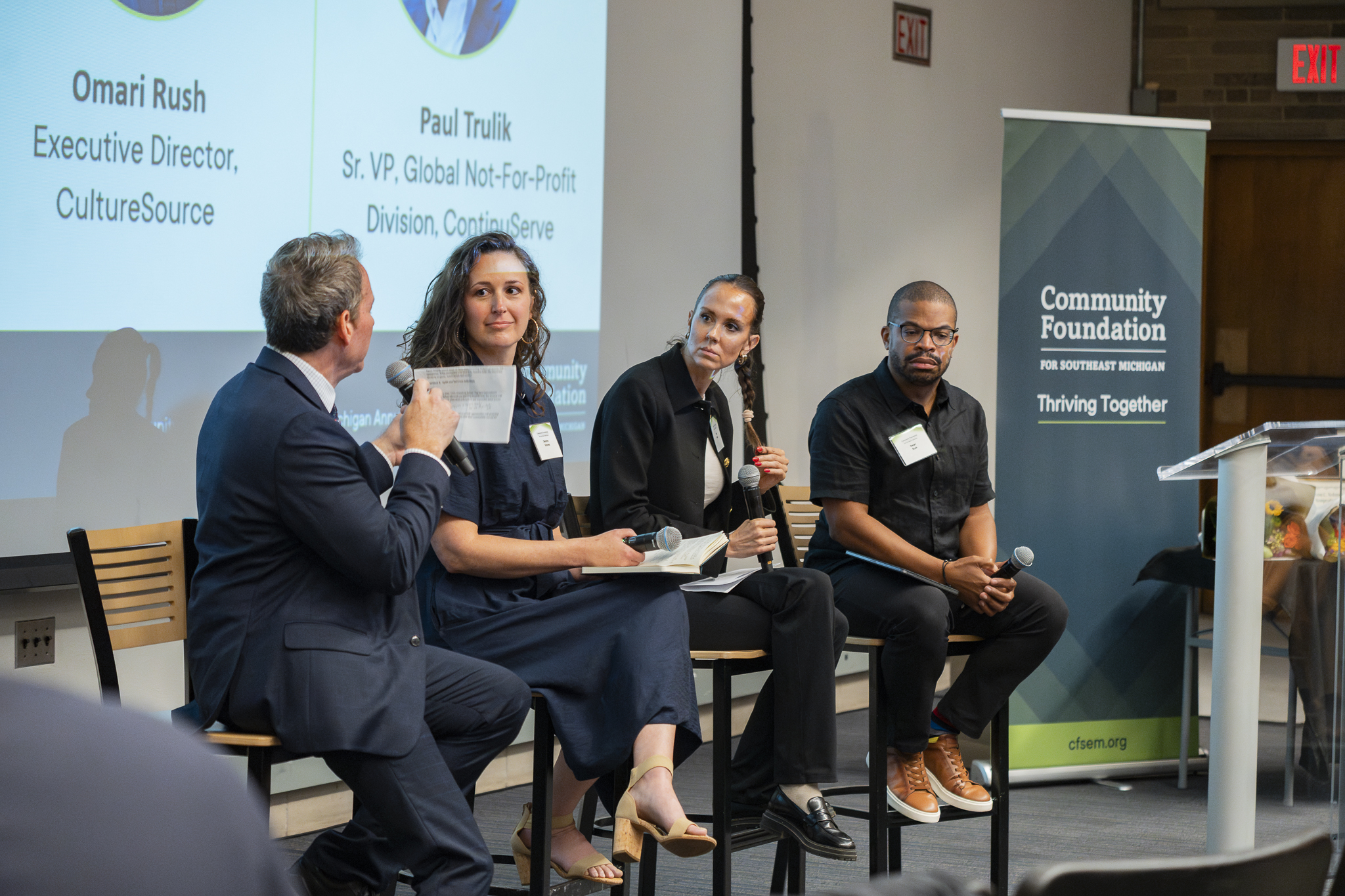
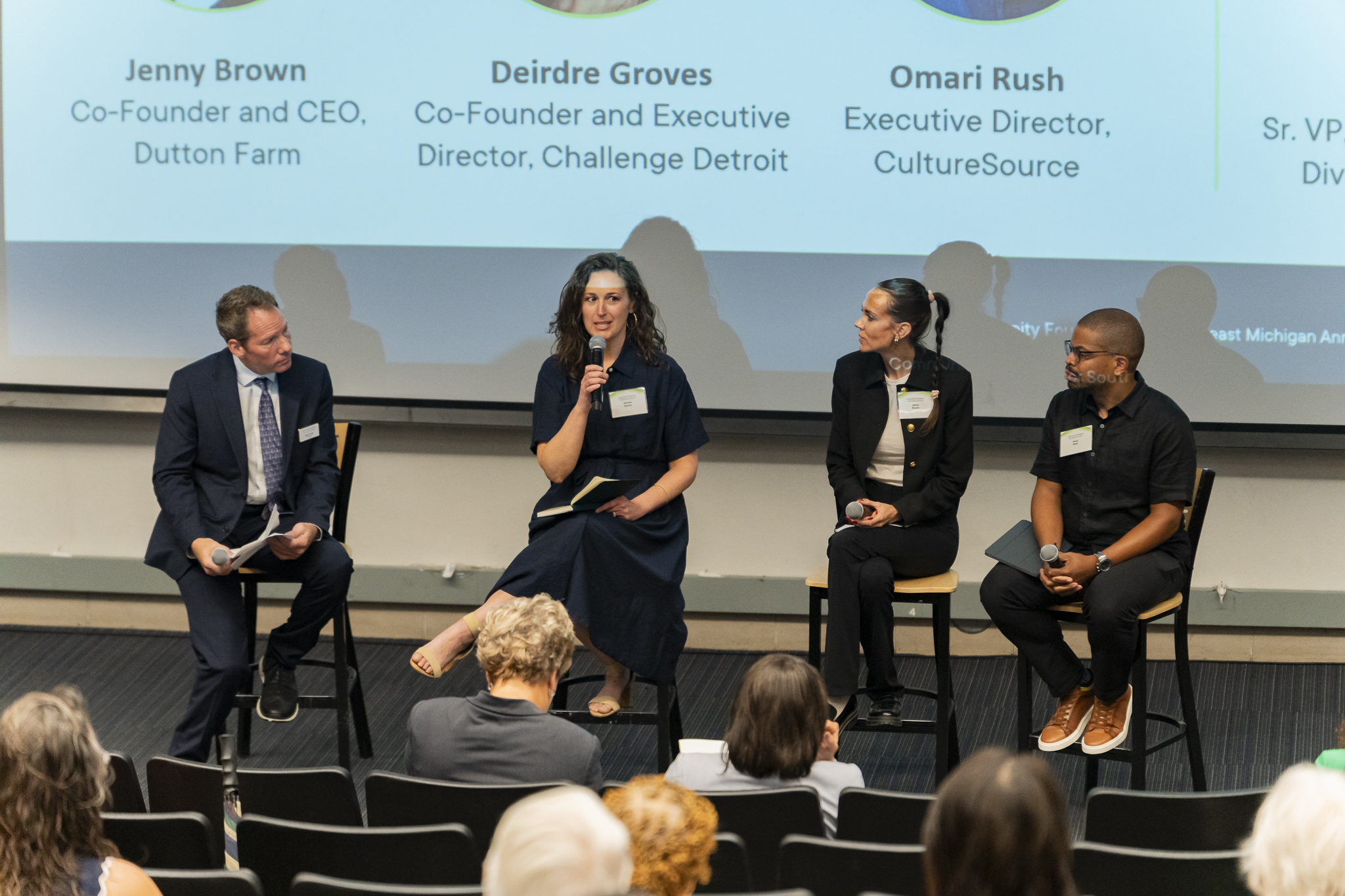
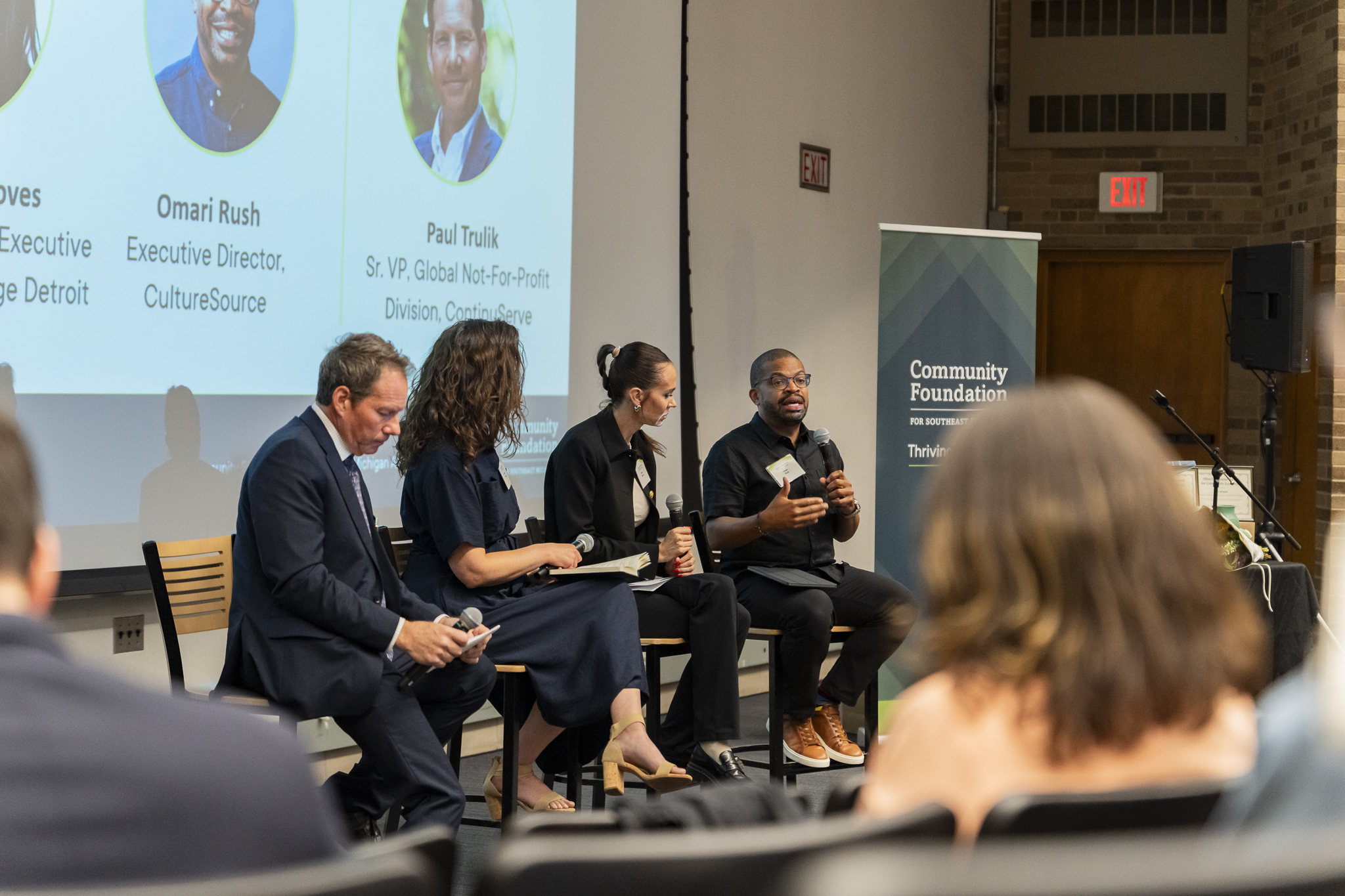
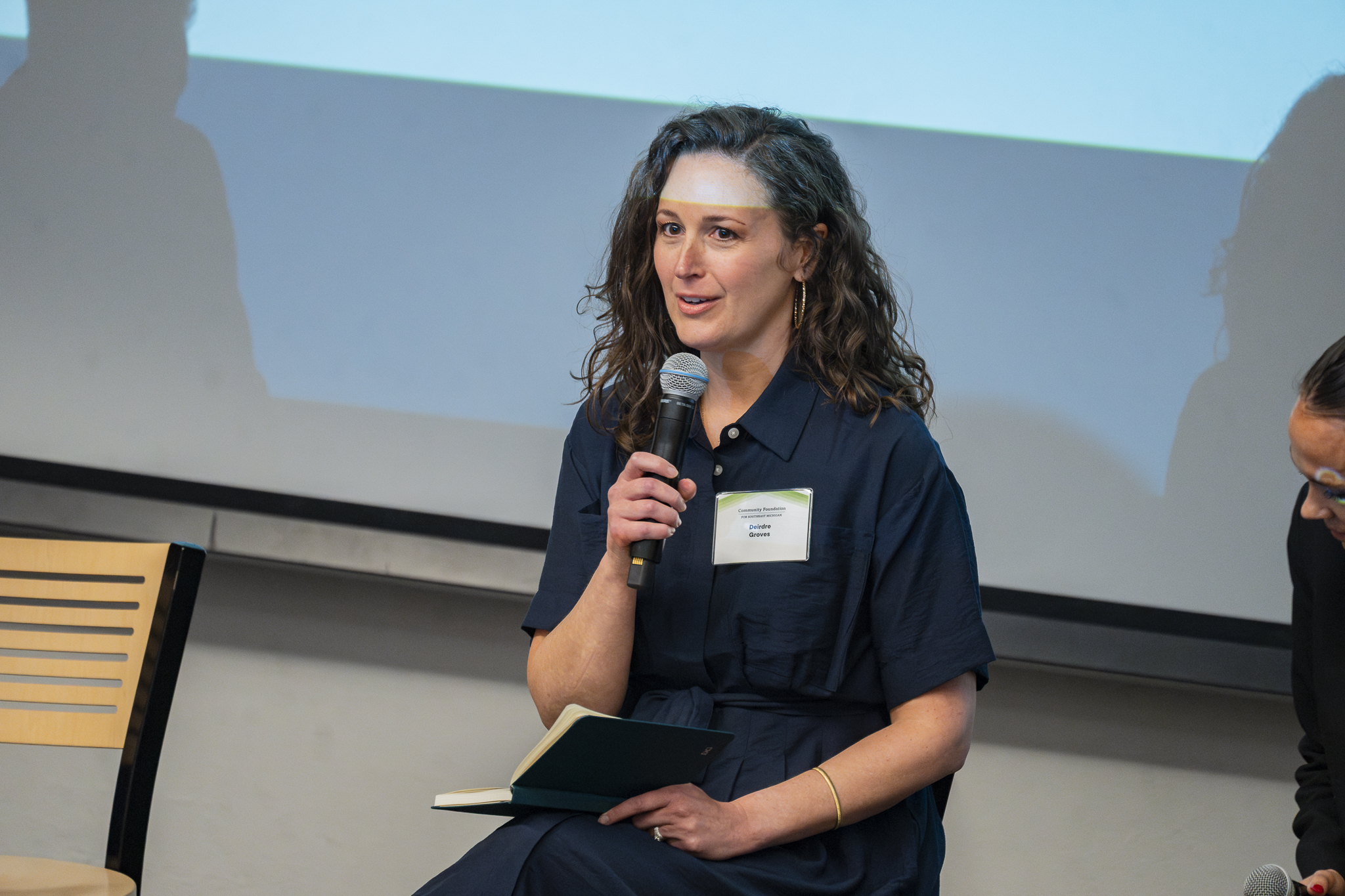
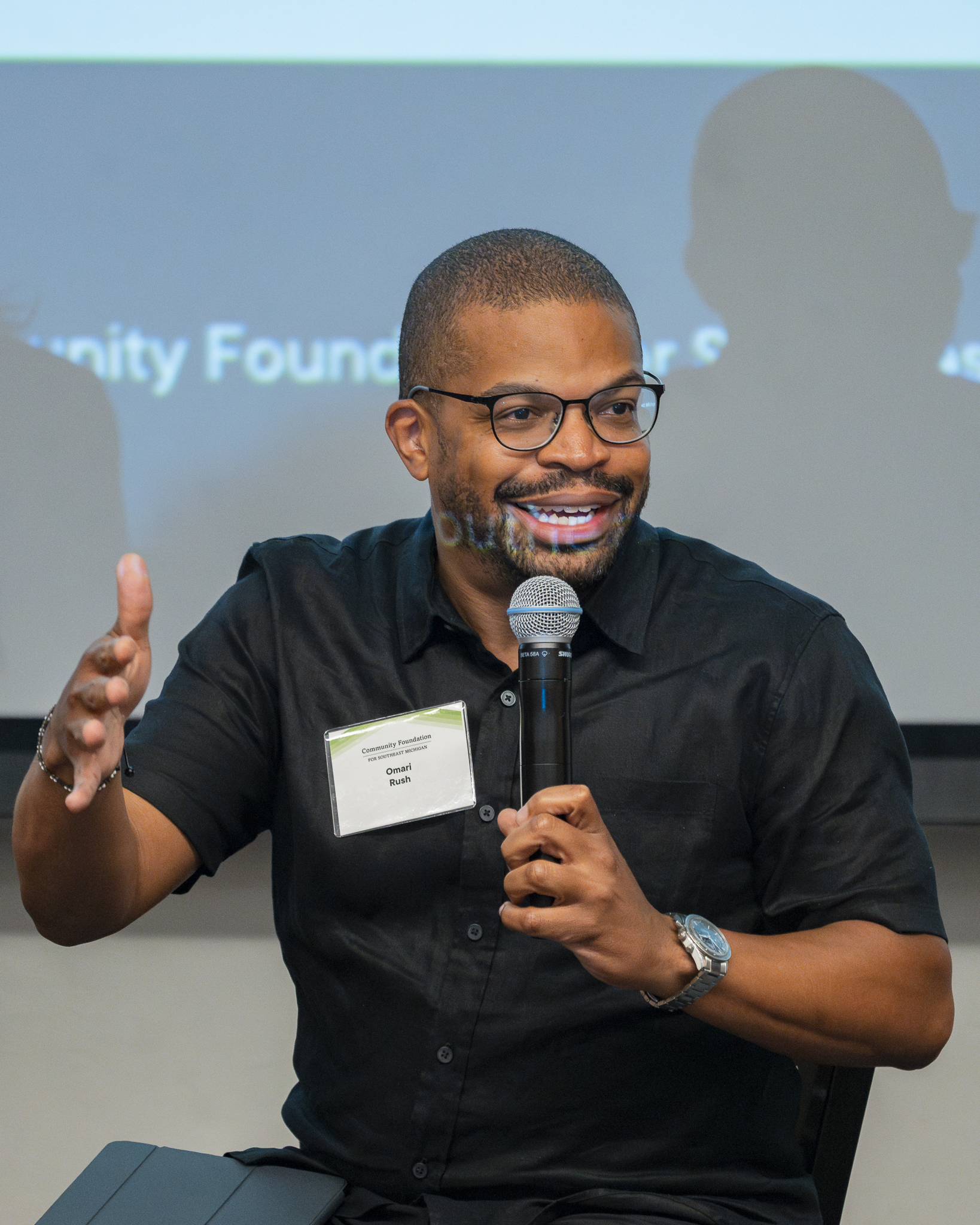
During the Community Foundation for Southeast Michigan’s annual meeting on June 24 at Lawrence Technological University in Southfield, we convened a panel of nonprofit leaders to talk candidly about the pressures reshaping the sector.
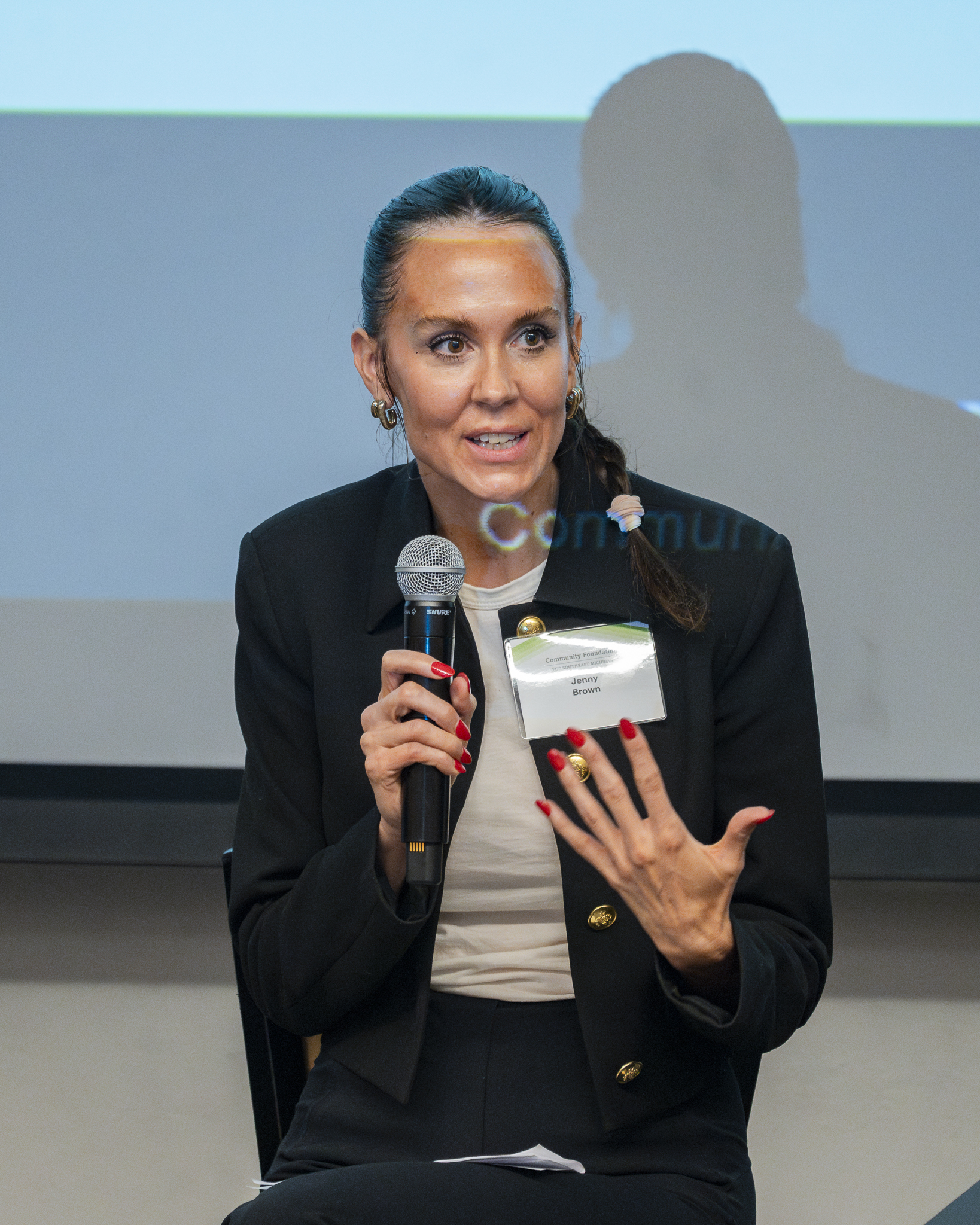
The discussion, “Sector Perspectives: Challenges and Opportunities Facing Nonprofits,” featured Paul Trulick, Sr. VP, Global Not-For-Profit Division, ContinuServe, and Community Foundation Trustee; Deidre Groves, Co-Founder and Executive Director, Challenge Detroit; Jenny Brown, Co-Founder and CEO, Dutton Farm; and Omari Rush, Executive Director, CultureSource.
Community Foundation Vice President of Community Impact Sarah Baltman Wedepohl set the stage with a preview of new survey data from the Urban Institute that the Community Foundation will release in the coming weeks.
- 71% of nonprofit leaders across southeast Michigan expect demand for their services to increase in 2026 — not hold steady, increase.
- 41% of those same organizations say they were unable to fully meet demand in 2025.
- 35% are planning some kind of organizational change, meaning roughly two-thirds are not currently planning major structural shifts, even as conditions around them continue to shift.
Taken together, the numbers describe a sector that is already stretched thin and preparing for even greater need, while most organizations continue to operate largely as they have before. As Wedepohl put it, a meaningful share of nonprofits are working through consequential decisions about their business models, programs, and futures largely on their own, in real time, under pressure.
The panel discussion that followed explored what that pressure looks like day to day; how nonprofits are responding in various ways including sunsetting, expanding and merging; and what kind of support might help. One theme resonated throughout: Resourcefulness has carried the sector a long way, but resourcefulness without infrastructure or support can slide into improvisation — and improvisation becomes riskier over time, both for organizations and for the communities depending on them.
The Community Foundation isn’t proposing a single answer. Instead, it’s signaling a willingness to think alongside nonprofits about what comes next, in partnership with funders, board members and others across the community.
If your organization is wrestling with similar questions, the Community Foundation wants to hear from you.
Want to continue the conversation? Email [email protected].