Emergency Department Medication for Opioid Use Disorder Initiative
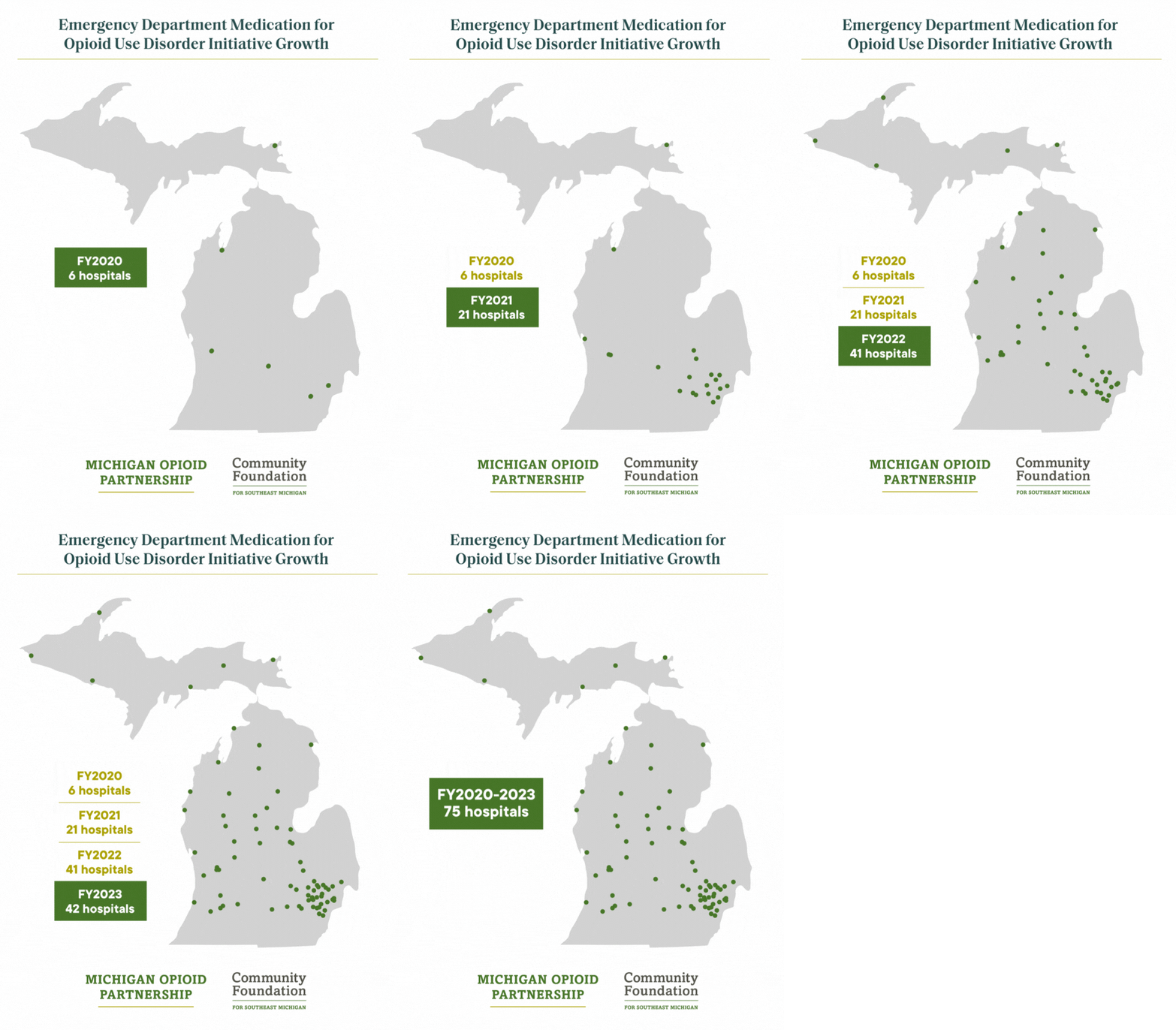
In collaboration with the Michigan Health & Hospital Association (MHA) Keystone Center, the Michigan Opioid Partnership led the Emergency Department Medication for Opioid Use Disorder (ED MOUD) initiative, which was designed to increase access to evidence-based ED MOUD throughout the state and support the transition to long-term office-based treatment upon discharge. From 2019 to 2023, participation in the ED MOUD initiative grew from six to 75 hospitals—representing approximately half of Michigan’s emergency departments and all ten prepaid inpatient health plan regions. An evaluation by Johns Hopkins Bloomberg School of Public Health and Vital Strategies showed that the initiative successfully leveraged emergency room settings to help patients get treatment.
Racial Equity in Opioid Treatment
From 2017 to 2021, the rate of opioid overdose deaths among Black Michiganders doubled, according to Michigan’s Department of Health and Human Services.
We partnered with New Detroit and Vital Strategies to create a training module for emergency department providers treating patients of color with OUD called Just Care. Twenty-five emergency department physicians in Southeast Michigan participated in the pilot implicit bias training. An evaluation from Johns Hopkins University found that participating providers became more knowledgeable about key concepts and disparities through the training. Since then, the training has been expanded to over 100 providers.
Jail-based Treatment Project
We funded organizations working in Michigan’s correctional system to expand access to medication for opioid use disorder and enhance identification of substance use disorders at jail intake and with first responders and post-overdose response. Wayne State University’s Center for Behavioral Health and Justice received a grant to coordinate the effort and work in partnership with the county jails and outpatient providers to serve incarcerated individuals with addiction.
Michigan Harm Reduction Project
Opioid use can result in fatal overdoses, and Michigan has among the highest opioid overdose fatality rates in the nation. Intravenous drug use can also lead to disease transmission, including HIV and Hepatitis C infections. Efforts, such as Naloxone distribution and syringe exchange programs, can help reduce harmful effects of drug use.
With global public health organization Vital Strategies and the Council of Michigan Foundations, we formed the Michigan Harm Reduction Project. This project funds local groups expanding harm reduction services in their jurisdictions to reduce overdose deaths. In 2020, we made grants to ten Michigan-based community foundations committed to caring for the health and wellbeing of people who use drugs.
Post Overdose Rapid Response Initiative
Research shows that in the 24 to 72 hours after a nonfatal overdose, there is a critical window of opportunity to engage people who use drugs and connect them with resources to prevent a repeated overdose.
In 2021, we funded seven nonprofit organizations across the state to provide outreach for individuals who have recently survived a drug overdose, connect them with resources, and prevent future overdose mortality – all within this three day window.
Post Overdose Rapid Response Quarterly Convenings
We co-host quarterly virtual convenings with Wayne State University’s Center for Behavioral Health and Justice for those engaged in post-overdose rapid response work to connect with peers. Practitioners use the time to share challenges and successes and discuss program-related learnings and questions. If you are engaged in post overdose rapid response work in Michigan and are interested in participating in these convenings, please contact us at [email protected].
“Walking through the jail doors is already a traumatic event…but being able to tell people that there is help waiting for them inside can be the first step…to rehabilitation.” Heather Wiengand, LPC HealthWest
If you or someone you know is struggling with opioid use disorder, visit Michigan.gov/opioids.
Sign Up For Email Updates